Wednesday, August 17, 2022

Several New Ham Satellites Now in Orbit

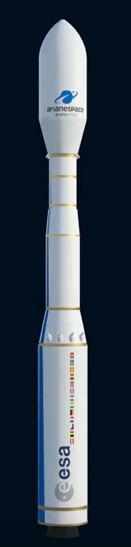
Two satellites carrying amateur radio digipeaters were launched into a medium-Earth orbit (3,665 miles) in mid-July aboard the inaugural launch of the ArianeSpace Vega-C rocket. The AMSAT News Service reports that the digipeaters aboard the AstroBio and Greencube satellites may be useful for long-distance digital QSOs.

In addition, ten Russian “Radioskaf” cubesats were released into orbit from the International Space Station during a spacewalk on July 21. According to the Radioskaf website, the new satellites, all of which operate on the 70-centimeter band, are intended to form a peer-to-peer information network, study Earth’s magnetic field, measure radio noise in outer space and transmit both slow-scan TV images and voice messages to amateurs on the ground. The voice messages will be transmitted in eight different languages.

(Image: Arianespace Vega-C launch vehicle; European Space Agency image)

Active Sun Serving Up Surprises

(NASA image)

UPDATE: NOAA has issued a geomagnetic storm watch for August 18-19, based on the cumulative effects of several small coronal mass ejections grazing Earth's magnetic field. The storm could reach a strong (G3) level. (Tnx Spaceweather)

As Sunspot Cycle 25 continues to ramp up, the sun is getting more and more active in ways that affect radio propagation here on Earth. 

According to Spaceweather.com, the sun on August 14 sent a plume of “dark plasma” into space after a huge explosion around sunspot AR3076. That resulted in a coronal mass ejection (CME) that will at least partially impact Earth and could touch off minor to moderate geomagnetic storms. 

On July 23, Spaceweather reported on a CME that touched off auroras that were visible as far south as Virginia, as well as the poorly-understood (but entertainingly named) ribbon of light known as “STEVE.”

QSO Today Virtual Ham Expo Returns in September


Despite the resurgence in in-person hamfests as we all start to adjust to Covid as part of our everyday lives, the online QSO Today Virtual Ham Expo is once again on the calendar, this time on the weekend of September 17-18. A new feature for this edition will be a “Project Gallery” that will include a product showcase for vendors as well as papers/projects submitted by individual amateurs. Those whose projects are accepted will have the $10 admission fee waived. For more information, visit <https://www.qsotodayhamexpo.com>.

Study of Arecibo Telescope Collapse Focuses on Cables and Sockets

The Arecibo radiotelescope in better days
(CQ Newsroom archives)
A forensic analysis of the collapse of the Arecibo radiotelescope in 2021 has concluded that problems in both the suspension cables and the sockets that held them led to the failures that precipitated the collapse. The detailed study, by the engineering firm of Thornton Tomasetti, reported that a combination of five major factors was responsible: “(1) the manual and inconsistent splay of the wires during cable socketing, (2) the design of the cable system with relatively low safety factors, (3) the occurrence of extreme environmental events such as hurricanes and earthquakes, (4) the non-replacement, repair or bypass of the sockets where large cable slips were observed, and (5) the addition of auxiliary cables as isolated cables.”

The report concluded that, while further study is needed to determine the service life of cable-socket assemblies, “the risk of socket failure can be mitigated by … (1) controlling the number and geometry of splayed-out wires during cable socketing, (2 and 3) designing cable systems with larger safety factors under gravity and transient loads, (4) monitoring the cable slip and slip rate after cable installation, and (5) designing cable systems with multiple adjacent cables on each span.” (Tnx WP3R)


Tuesday, July 19, 2022

FCC Retires Old “CORES” Registration System

If you’ve been licensed for more than six years, you will probably want to update your FCC CORES (COmmission REgistration System) file to move it to the commission’s updated system. The ARRL Letter reports that use of the new system is now mandatory and that the legacy system was retired as of July 15. This is the system that keeps track of your licensing records and issues your FRN, or FCC Registration Number, without which you can’t do business with the FCC’s computers. The updated system may be accessed at <https://apps.fcc.gov/cores/userLogin.do>.