Thursday, June 21, 2012

House Committee Calls for Unified Oversight of MARS


(Courtesy Architect of the Capitol)
A committee report accompanying the National Defense Authorization Act for fiscal year 2013 calls on the Pentagon to "clarify and maintain policy oversight of MARS within the Office of the Secretary of Defense" and to appoint one person to coordinate the policies and activities of volunteer group across the Army, Air Force and Navy/Marine Corps. Currently, the Military Auxiliary Radio System operates independently in each service. The ARRL Letter says the report from the House Armed Services Committee recognized MARS as "an important back-up" to government communication systems but noted that oversight is unclear due to a recent Pentagon reorganization and that there is a lack of standardization among the three MARS branches.

Ohio Gets State "PRB-1" Law


Ohio has joined me roster of states that have incorporated into state law federal restrictions on zoning laws that involve amateur radio antennas and towers. Significantly, reports the ARRL Letter, Ohio's new law requires any agency that denies an amateur's antenna application to state the reasons for the denial and - on any appeal - the agency has the burden of proof, not the amateur.

Welsh Ham Carries Olympic Torch


A Welsh ham who has been actively involved in charity work for years was honored for his efforts by being allowed to carry the Olympic torch on its journey toward the opening ceremonies of the 2012 London games. According to Newsline, William Williams, GW8TGS, carried the torch through the city of Aberystwyth for about a half hour on May 27th.

The Strange Case of DJ6SI


CQ DX Hall of Fame member Baldur Drobnica, DJ6SI, has endured a bizarre series of events that started when he tried to operate his portable ham radio while on vacation in Greece. According to reports on Newsline and other sources, a police officer suspicious of the "strange noises" coming from Baldur's computer placed him under arrest. Initial reports were that he was charged with espionage, but Baldur said that did not happen. 

He was, however, charged with making radio transmissions without permission from the Greek government (both Greece and Germany are signatories to the CEPT treaty which permits amateurs from any one member country to operate in any other member country without special permission), operating a radio that covered more spectrum than only the Greek amateur bands, and refusing to turn over his equipment to the arresting officer.

According to Baldur's attorney, the first two charges were dropped by the court after determining that Baldur was a properly licensed radio amateur. However, he was convicted on the third charge, which the attorney said would be appealed. Meanwhile, if you're visiting Greece, it might be best to leave your ham gear at home.

Building Satellites With Video Game Technology


AMSAT-UK is part of a group planning to build a set of cubesats that will test an autonomous on-orbit docking system based on XBOX Kinect video game technology. The group also includes SpaceRef.com and Surrey Satellite Technology, Ltd., and is based at the University of Surrey in England, home of the UOSAT amateur satellites of the 1970s and '80s. AMSAT News Service reports that the project - named STRaND-2 - will consist of two twin satellites that will be separated after launch. After each one is checked out, ground controllers will command them to dock with each other. They will then use components from a Kinect game controller scan the area around them and provide the satellites with 3-D spatial awareness to align with each other and dock. If successful, it could open a whole new way of building and maintaining satellites, including the potential for changing out modules in orbit or using multiple small cubesats to link up in orbit and build a large satellite by themselves.

ICOM Inks Deal With Boy Scouts for 2013 Jamboree


ICOM America has agreed to be the amateur radio transceiver supplier for the national Scout Jamboree next year at Summit, West Virginia. The company will also supply three permanent repeaters for the new Jamboree site, one 2-meter analog repeater, a 70-centimeter analog machine and a 70-cm D-STAR repeater. In addition, ICOM will supply ten loaner stations for use by Boy Scout councils around the country to use in promoting amateur radio. Details of the stations, and of the planned setup for the Jamboree, are still being worked out.

Gene Zimmerman, W3ZZ, SK


VHF weak-signal authority and CQ Contest Committee member Gene Zimmerman, W3ZZ, became a Silent Key in early June. Gene was responsible for reorganizing the CQ World Wide VHF Contest into its current format and was a major behind-the-scenes player in the launch of CQ VHF magazine in the mid-1990s. From 2002-2011, he was QST magazine's VHF columnist. Professionally, Gene was a microbiologist with a long career at the National Institutes of Health, both as a researcher and administrator. For more on Gene, see this month's "Zero Bias" and "VHF-Plus" columns.

New Extra Class Question Pool Effective July 1


July 1 is the effective date for the new Element 4 question pool ... the questions that make up the Amateur Extra Class license exam. Each exam is made up of 50 questions selected from the pool of just over 700 possible questions. The new question pool will be used through June 30, 2016. Next up for replacement is the Technician Class (Element 2) pool in 2014, followed by the General Class (Element 3) pool in 2015.

ARISS Looking for Volunteers


The Amateur Radio on the International Space Station program (ARISS) is looking for hams interested in volunteering as ground support crew members and technical mentors. According to the AMSAT News Service, ground support teams set up actual contacts between schools and other selected locations for contacts between students and astronauts aboard the International Space Station. Technical mentors serve as liaisons between NASA and the ground support teams.  More information is available online at <http://www.arrl.org/ARISS-volunteers>. Hams interested in volunteering may e-mail <ARISS.Recruit@verizon.net>.

Dayton Attendance Up, Plano Power Down


The Dayton Amateur Radio Association says that over 24,000 people attended the 2012 Dayton Hamvention (R), and that both attendance and vendor sales were up over 2011.
Meanwhile, the Ham-Com hamfest in Plano, Texas in early June was plagued with two power outages, a short one on Friday and a longer one on Saturday. Many attendees went home and many vendors started packing up during the second outage, which began around 2 PM and lasted about an hour and a half.

CQ Launches Industry e-Newsletter


CQ Communications, Inc. has launched an online newsletter for and about the amateur radio industry. Named the "CQ IndustryInsider," it is edited by Jason Feldman, who currently works with both Popular Communications and WorldRadio Online. The newsletter reports on news and trends in the hobby radio marketplace, as well as company news and marketing tips. Anyone who works in the amateur radio, scanning or monitoring industry and is not currently receiving the "IndustryInsider" may contact CQ Advertising and Marketing Director Chip Margelli <ads@cq-amateur-radio.com> to ask to be added to the mailing list.

Sunday, June 3, 2012

WRO-Pop'Comm Live Internet Chat Tonight

Join WRO-Pop'Comm Editor Richard Fisher, KPC6PC/KI6SN, for our live, monthly Internet chat session this evening, Sunday, June 3, at 8 p.m. Eastern time (0000 UTC) at <http://www.WorldRadioOnline.blogspot.com>. Hope to see you there.

Tuesday, May 29, 2012

CQ Announces 2012 Hall of Fame Inductees


CQ magazine announced its 2012 Hall of Fame inductees at the Dayton Hamvention, celebrating the 45th anniversary of the CQ DX Hall of Fame with three new members, along with two new inductees into the CQ Contest Hall of Fame and 16 new members of the CQ Amateur Radio Hall of Fame.

      The CQ Amateur Radio Hall of Fame honors those individuals, whether licensed hams or not, who have made significant contributions to amateur radio; and those amateurs who have made significant contributions either to amateur radio, to their professional careers or to some other aspect of life on our planet. The 2012 inductees (listed alphabetically) are:

      George Badger, W6TC (SK), expert in tubes and tube circuit designs; executive of Eimac and later President of Svetlana
      Bill Brown, WB8ELK - "Father" of amateur radio high-altitude ballooning
      Robert Brown, NM7M (SK) - Expert on 160-meter propagation, author and retired physics professor
      Evelyn Gauzens, W4WYR - Chair of the Miami "Tropical Hamboree" hamfest for 45 years; ARRL Southeastern Division Vice Director, Honorary Vice President
     Richard Garriott, W5KWQ– Younger half of first U.S. father-son team to travel in space. (His father is Owen Garriott, W5LFL, the first astronaut to operate amateur radio from space, and a 2001 Amateur Radio Hall of Fame inductee.)
      William W. Hansen (no call)(SK), "Father of Microwave Electronics"
      Richard Kirby, ex-W0LCT/HB9BOA (SK) - Director of the ITU's International Radio Consultative Committee (CCIR) from 1974 to 1995
      Fred Maia, W5YI (SK) - One of the architects of VE program, first FCC-designated VEC; editor/publisher W5YI Report; long-time CQ columnist
      Steve Mendelsohn, W2ML - Communications Director, New York City Marathon, 1976-present; former ARRL First Vice President, Director (W2ML became a Silent Key on May 23; see story below and in the July issue of CQ -- ed.)
      Larry Mulvehill, WB2ZPI - Photojournalist who has covered major news events around the world for more than 50 years; CQ cover photographer for over 30 years
      Rowley Shears, G8KW (SK) - Founder of KW Electronics in UK; helped re-establish amateur radio in Germany after World War II
      Mike Staal, K6MYC - Antenna expert, co-founder of KLM and M2 Antennas
      Frederick Terman (ex-6FT, W6AE, W6XH) (SK) - Microwave pioneer, partner with William Hansen (see above)
      Patrick Tice, WA0TDA - Manager, Courage HandiHam System; for more than 20 years
      Louis Varney, G5RV (SK) - Inventor of the G5RV antenna
      William A. Wilson, K6ARO (SK) - First U.S. Ambassador to the Vatican after formal diplomatic relations were re-established in 1984 after more than a century

CQ DX and Contest and DX Halls of Fame

The CQ DX and Contest Halls of Fame honor those amateurs who not only excel in personal performance in these major areas of amateur radio but who also "give back" to the hobby in outstanding ways. The CQ DX Hall of Fame, founded in 1967, celebrates its 45th anniversary this year.

The 2012 inductees to the CQ DX Hall of Fame are:
      Don Chesser, W4KVX (SK) - Pioneering DXer and DXpeditioner; founder of DX magazine
      Glenn Johnson, W0GJ - A leading DXpedtioner, leading many teams, often to very rare countries; personally responsible for restoring amateur radio in Bhutan in 2000
     Carl Smith, N4AA - Editor and publisher of DX magazine and the weekly "QRZ DX" bulletin. Also CQ's DX Editor and leader of effort to create Southern Appalachian Radio Museum.

The 2012 inductees to the CQ Contest Hall of Fame are:
      Jim Reisert, AD1C - Maintains and constantly updates the country and prefix files that are depended upon by virtually all of the major contest and general logging programs, as well as software for the major DX clusters.
      Lothar Wilke, DL3TD (SK) - Leading contester and promoter of contesting in Germany; under his leadership, DA0HQ won the IARU World Championship 11 times.

Formal inductions to the CQ Contest and DX Halls of Fame were made at the Dayton Hamvention.® More detailed descriptions of inductees will appear in the official announcement in the July 2012 issue of CQ magazine.

FCC Back at Full Strength


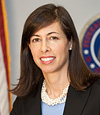
FCC Commissioner
Jessica Rosenworcel
FCC Commissioner
Ajit Pai

Jessica Rosenworcel and Ajit Pai are the two newest FCC Commissioners, sworn in on May 14 by Commission Chairman Julius Genachowski after receiving Senate confirmation earlier in the month. The two had been nominated last November by President Obama to fill seats vacated by former Commissioners Michael Copps and Meredith Atwell Baker. Senate action on their nominations was blocked by Sen. Charles Grassley (R-IA) over the FCC's approval of LightSquared's wireless network application that threatened massive interference to the GPS navigation system. Grassley received the documentation he was requesting in early May and the Senate quickly approved the nominations of Rosenworcel, a Democrat, and Pai, a Republican.

Vanity Callsigns May Cost 80 Cents More


The FCC's budget plan for the next fiscal year includes an 80-cent increase in the fee for amateur radio vanity callsigns, to $15 for a 10-year term from the current $14.20. Each year, the Commission modifies the vanity call fee as part of its overall budget. According to the ARRL, the fee has ranged from a low of $11.70 in 2007 to a high of $70 at the inception of the vanity call program in 1994. The new fee, once finalized by the FCC, will take effect in the fall.

M-V Island Deleted from CQ Countries List


CQ DX Awards Manager Keith Gilbertson, K0KG, reports that Malyj Vysotskij Island (R1M) has been deleted from the CQ countries list. This follows the Deutscher Amateur Radio Club's (DARC's) decision to drop the island from its WAE (Worked All Europe) list. The ARRL dropped the island from the DXCC list in February, as a result of a new treaty between Russia and Finland that ended the island's separate status. CQ's country list is based on a combination of the DXCC and WAE lists, so M-V Island remained active on the CQ list as long as it remained on the WAE list.

Ham Radio Pulled into Territorial Dispute


Amateur radio has been pulled into an ongoing dispute between China and the Philippines over ownership of Scarborough Reef in the South China Sea. A report on Southgate Amateur Radio News says a Chinese website (sina.com) claims that correspondence regarding amateur radio operation from the reef supports Beijing's claim to sovereignty. 

 
According to the website, in 1990, the Philippine ambassador to Germany informed a German ham that the reef was not within Philippine territory, and that that was confirmed by a 1994 exchange of letters between the Philippine Amateur Radio Association and the ARRL. For more, see <http://bit.ly/KCbFto>.

Cuban Hams Get New Digital Modes


Courtesy CIA World Factbook
Cuba's government has approved the use of several new digital modes by the country's ham radio operators, according to a post by CO7WT on Southgate Amateur Radio News. Previously, Cuban hams have been permitted only to use PSK31, QPSK31, AMTOR, packet and RTTY. The new rules now authorize the use of Olivia, MFSK, JT65, most PSK variants and others, and they set up a mechanism for Cuban amateurs to apply for approval of additional modes in the future.

CQ Launches Industry E-Newsletter


CQ magazine publisher CQ Communications, Inc. has launched an e-mail newsletter for the hobby radio industry. The CQ IndustryInsider debuted just before the Dayton Hamvention® and reports on news and trends in the amateur radio, scanning and listening marketplace, as well as company news and announcements, marketing tips and an idea exchange for spotlighting concepts for new products and services. Industry members who did not receive initial issues and would like to be added to the mailing list should contact CQ Advertising Manager Chip Margelli at <ads@cq-amateur-radio.com>.

Heathkit Closes Again


Heathkit's highly-promoted return to kit-making, including a possible return to the amateur radio market, appears to have failed. The ARRL and others report that Heathkit Educational Systems seems to have closed its doors. Company officials were not available for comment, although several listed the company as a former employer on social media profiles. In addition, listed phone numbers for Heathkit all respond with busy signals and the company website's online store page no longer comes up (even though the main website remains active). One outside sales representative who worked with Heathkit told ARRL that the company has "temporarily closed," but he said he was not optimistic that it would reopen.

Steve Mendelsohn, W2ML, SK


Steve Mendelsohn, W2ML (left) - seen here receiving
a Lifetime Achievement Award from CQ at last year's
Pacificon, became a Silent Key in May. Pictured with
Steve are CQ Contributing Editor-at-Large Gordon West,
WB6NOA (center), and CQ Advertising Manager Chip
Margelli, K7JA (right).

Newly-inducted CQ Amateur Radio Hall of Fame member Steve Mendelsohn, W2ML, became a Silent Key on May 23 after a long fight against pancreatic cancer. He was 67. Best-known as longtime Communications Director of the New York City Marathon, the New York Times published a lengthy news story on his passing and his work with the Marathon. Mendelsohn was also very active with the ARRL, serving as a Vice Director, Director and First Vice President, as well as several local radio clubs in his home state of New Jersey. A broadcast engineer who worked for both CBS and ABC, he was also game-day frequency coordinator for the New York Jets football team. For more on Steve, see "Zero Bias" and the CQ Hall of Fame announcement in the July issue of CQ.

Progress on John Kanzius's Cancer-Fighting Technology


Pancreatic cancer is one of the types of the disease in the cross-hairs of ongoing development of a method of killing cancer cells with radio waves that was developed by the late John Kanzius, K3TUP, and featured in an interview in the January 2009 issue of CQ. WINK-TV News reports that preliminary animal tests at MD Anderson Cancer Center in Houston have been successful in fighting liver and pancreatic cancers, and that preparations are now being made to begin tests on larger animals, such as pigs. If those tests are successful, human trials would follow.

Radio Canada QRT on Shortwave and Satellite


For many hams starting out as shortwave listeners, one of the first and loudest stations logged was often Radio Canada International. Not for much longer. "Newsline" reports that in a cost-cutting move, RCI is planning to shut down all shortwave and satellite broadcasts and abandon its legendary transmitter facility in Sackville, New Brunswick, leaving the World Wide Web as its only means of reaching the world. In addition, Newsline reports, RCI will stop producing its own programming and will shut down its news department.

Six Hams Aboard Space Station


One American and two Russian amateurs have arrived at the International Space Station, joining a crew of three ham-astronauts/cosmonauts already aboard the orbiting outpost. Astronaut Joseph Acaba, KE5ADR, and cosmonauts Gennady Padalka, RN3DT, and Sergei Revin, RN3BS, are the latest crew members to arrive at the station. They were preparing for the arrival of the Dragon cargo ship launched by SpaceX, the first commercial launch to the station. The Dragon was to deliver food, clothing and 15 experiments from the Student Spaceflight Experiments Program, among other supplies. It was to reloaded with trash and material that was no longer needed aboard the station and sent back to Earth for a planned parachute descent into the Pacific Ocean.

Boy Scouts to Offer Morse Code Interpreter Strip; ICOM Inks Deal for Jamboree Gear


Morse code has been designated as a language by the Boy Scouts of America, which has added it to the list of "interpreter strips" that scouts may earn. The strips indicate proficiency in either a foreign language or sign language, and now, Morse code. 

Also on the ham radio Scouting front, ICOM America has signed a sponsorship agreement with the Boy Scouts to supply ham radio equipment and technical support for the 2013 National Jamboree. This will include the K2BSA jamboree station, Radio Merit Badge support and the Jamboree on the Air (JOTA).

2007 Young Ham of the Year Becomes Navy Ensign


Eagle Scout, K2BSA jamboree operator and 2007 Newsline Young Ham of the Year Grant Morine, W4GHM, has been commissioned as an Ensign in the United States Navy. Morine is a 2012 graduate of the University of North Carolina at Chapel Hill, where he was a member of Naval ROTC, and had a double-major in History & Peace and War & Defense, as well as a minor in Naval Science. His first assignment is as a Gunnery Officer aboard the USS Laboon, based in Norfolk, Virginia. Ensign Morine is the son of Pamela and Bill Morine. Bill, N2COP, is ARRL North Carolina Section Manager.
L to R: William "Bill" Morine N2COP, Reid Morine W4RSM,
Grant Morine W4GHM, Pamela Morine (Photo by Woody Woodward, K3VSA)

Monday, May 7, 2012

Coast Guard to Participate in Armed Forces Day Cross-Band Test


The U.S. Coast Guard has joined the roster of military stations participating in the 2012 Armed Forces Day
Cross-Band Test this coming weekend, according to Army MARS Public Affairs Officer Bill Sexton, N1IN.

Coast Guard station NMN at Atlantic Fleet headquarters in Chesapeake, Virginia, will be listening on the 40, 20 and 17 meter amateur bands between 1300 UTXC on May 12 and 0300 UTC on May 13.
Amateur stations should listen on the following frequencies and transmit in any legal portion of the phone bands (listen to NMN for additional guidance on where the operators may be listening). NOTE that transmissions on 40 meters must be in UPPER SIDEBAND rather than the commonly-used lower sideband.

STATION: NMN (12 May 1300Z - 13 May 0030Z)
Frequency     Emission        Amateur Band

 7.528.6 kHz    USB                             40M (USB)*
14.427.0 kHz   USB                             20M (USB)
18.196.1 kHz   USB                             17M (USB)

This is part of the annual Armed Forces Day observance in which military stations traditionally operate cross-band with amateurs.

Wednesday, April 25, 2012

CQ/LoTW Update


 The introduction of Logbook of the World (LoTW) support for CQ awards - beginning with WPX - has been delayed by the ARRL's need to devote resources to the introduction of online DXCC applications (see below) and explanations regarding its new DXCC fee structure. A beta test of the system by a small group of amateurs active in WPX will begin at the end of April. ARRL officials now anticipate a full launch of WPX support on LoTW by mid-May. We will keep you updated as developments warrant.

London Calling…


(From RSGB website)
The Olympics are coming to London this summer and two special event stations will be on the air throughout the competition. Newsline reports that 2O12L will be active from Eltham Place in southeast London, operating all modes on 160-2 meters, while 2O12W will be on the air from Wales, operating 160 meters through 23 centimeters, on all modes including slow-scan TV and satellites. 2O12W will be located at Whitmore Bay on Barry Island. Both stations will go on the air as of July 27. More information is available at <www.2O12L.com> and <www.2O12W.com>, respectively. (Please note: Those are "ohs," not zeros, in the callsigns)

Meanwhile, the AMSAT News Service reports that hams in and around the Olympic venues will have temporary limits placed on their operations on 70 centimeters as well as parts of the 2.3 and 3.4 GHz bands between June 28 and September 23. This will be to accommodate the spectrum needs of the world media as well as teams themselves and visitors to the games. Specifics are available at <http://www.uk.amsat.org/6574>.

New Chief for Army MARS


The man who helped scuttle plans to "phase out" the use of Winlink 2000 by Army MARS is now in charge of the program. According to Army MARS, Stephen G. Klinefelter, 61, is a retired Signal Corps colonel who is now a civilian employee of the U.S. Army Network Enterprise Technology Command, under which MARS operates. Late last year, the Pentagon announced that it would be phasing out MARS's use of the Winlink 2000 messaging system due to security concerns, despite the fact that it is widely used by many state and local emergency management agencies with which MARS would be expected to work during a disaster or major emergency. Klinefelter persuaded the army's Chief Information Officer, Lt. Gen. Susan Lawrence that the resources of amateur radio far outweighed any risk from enemy hackers. She ordered an exemption for Army MARS.
 
Klinefelter assumed the position of Army MARS Chief upon the retirement of Jim Griffin, who held the spot since 2009. Klinefelter is remaining in his primary post and will be helped with MARS matters by a new MARS Program Officer, who had not been named as of press time.

Ham Radio in Guitar World Cover Story


Rock superstar Joe Walsh, who is also WB6ACU, is featured on the cover of the May issue of Guitar World magazine. In the accompanying interview (timed to mesh with the June 5 release of his newest solo album, "Analog Man"), Walsh makes several references to amateur radio, including a discussion of how the technical knowledge he gained as a ham has helped him work with guitars and their sound. He also discusses introducing the prototype Talk Box to Bob Heil, K9EID, who went on to manufacture and market them to rock musicians.

FCC Seeking Comments on Impediments to Amateur Radio Communication


The FCC in early April requested comments from the public on amateur radio's role in  emergency communications and whether private land use regulations impede hams' abilities to perform that role. The request came about as a result of the inclusion in the law that extended payroll tax cuts through 2012 of a section requiring the FCC to make a study of those issues and report back to Congress in six months with recommendations. The Docket Number is DA 12-523. Comments are due by May 17.

The ARRL additionally asked hams to share their personal experiences with amateur radio emergency communications and with deed restrictions and so-called "CC&Rs." The League requested that input by April 25 so it could include the data in its FCC comments, which were due by May 17. The FCC's report to Congress is due by the end of August.

No Restrictions on Specific Data Modes on 60 Meters


NOTE: The following updates information published in the May issue of CQ and previously on this news page.

Any digital mode that meets the technical restrictions of the new FCC rules for the 5 MHz band is now permitted. This, after the National Telecommunications and Information Administration (NTIA), which controls primary access to the band, indicated in a letter to the ARRL that it had no objection to any specific modes, as long as they fall into the category of a 2K80J2D emission and have a bandwidth of 2.8 kHz or less. The ARRL, relying on old NTIA advice (but the most current in written form), had originally said the agency asked that only PSK-31 and PACTOR-III be used on the band. With this clarification, any digital mode meeting the above standards is permitted. For more details, see <http://www.arrl.org/60-meter-faq>.

ARRL Introduces Online DXCC Applications


ARRL members may now partially apply online for DXCC awards and endorsements. According to the ARRL website, the new system, which debuted April 2, allows users to use an online form to select cards that he/she would like to submit. The list is then printed and taken, along with the QSL cards, to an ARRL card checker or sent to League headquarters. It appears that the biggest change is that the application fee (which is lower when using the online form) is collected online by the ARRL, rather than having to go through the card checker. More details are available at <http://bit.ly/HiO6Ke>.

ARRL: Ham Ranks Keep Growing in Early 2012


The number of applications for new amateur radio licenses in the first three months of 2012 was 30% higher than for the same period last year, according to the ARRL. There were over 7500 new FCC licenses issued between January 1 and March 31, 2012, according to the League, significantly outpacing the 5800 new licenses issued in the first quarter of 2011. However, this is still below the first-quarter total for 2010, which was just over 8200. Nonetheless, the ranks of amateur radio licensees in the U.S. remains at an all-time high, with the total now exceeding 704,000. ARRL/VEC Manager Maria Sommer, AB1FM, also noted in the ARRL Letter that the number of license upgrades was also up this year versus last year, although not so dramatically, rising 6% from 2011. Technicians, Generals and Extras all are at all-time highs.

Pop'Comm Monitor Registration Program Tops 1000


Just a little more than three months after its introduction, the Popular Communications Monitoring Station registration program has signed up more than 1000 participants. The program, modeled after the old WPE and WDX registration programs of the 1960s and '70s, assigns callsign-like identifiers to active shortwave listeners and scanner monitors. The magazine plans to introduce awards as part of the program as well. For more information, or to register, visit <http://www.popcommmonitors.blogspot.com/>.

Google Introduces Morse Code E-Mail (on April 1)


Courtesy Google
In an April Fool gag most greatly appreciated by hams, Google on April 1 announced the introduction of "Gmail Tap," a combination of hardware and software to enable people to send e-mail messages via Morse code. The system would use special smartphones in which the usual keypad is replaced by two buttons … one for a dot, the other for a dash. No word, however, on whether you'd be able to plug in your paddles to send faster!

Japan Plans 5 Amateur Satellite Launches


The Japan Aerospace Exploration Agency announced plans in late March to launch five satellites operating in the amateur bands … four of which are slated to be launched from the International Space Station. One of the satellites, named HORYU-2, was scheduled for a May 17 launch, so it may already be in orbit by the time you read this. The others, according to Newsline, are slated for a late July launch to the ISS, along with the JEM Small Satellite Orbital Deployer, a device that will enable the launch of small satellites from the station's robotic arm. The satellites scheduled for that launch include two built in Japan - WE-WISH and FITSAT-1 - plus the TechEdSat from San Jose State University in California and the F-1 satellite, built in Vietnam. Initial plans call for all four to be launched from the JEM deployer in late September.

Multi-Cubesat Launcher Built by Naval Postgraduate School


Vidur Kaushish, a student at the Naval Postgraduate School,
works on the NPS CubeSat Launcher. (Courtesy NPS website)
Students at the Naval Postgraduate School have developed an auxiliary payload platform that will permit the launch of as many as 24 cubesats at a time. AMSAT News Service reports that the NPS CubeSat Launcher is designed to release satellites one at a time by opening spring-loaded doors at the desired orbital altitude. The first launch, slated to carry 11 cubesats, is planned for this August. More information is available at <http://tunyurl.com/CubeSat-NPSCuL>.

Editor's note: Success for either or both of these launchers (the NPSCuL and Japanese JEM projects) would open the door for greater availability of small satellite launches at much lower cost, since the costs would be shared among developers of the different satellites sharing the launch.

ANS Co-Editor Dee Interdonato, NB2F, Silent Key


The AMSAT News Service lost one of its two editors in April with the passing of Dominick "Dee" Interdonato, NB2F, at age 64. Dee was also "Mr. AMSAT" in the New York/New Jersey area, serving as the amateur satellite organization's regional representative at hamfests, club meetings and other events. Dee was a Vietnam veteran, and an amateur musician. He was retired from the Port Authority of New York and New Jersey, where he had been supervisor of the Radio Shop. The family asks that donations in his memory be made either to the Vietnam Veterans of America or to AMSAT.

Hams on 23 Centimeters Must Protect New FAA Radars


Amateurs using the 23-centimeter band (1240-1300 MHz) need to be aware of a new generation of radar systems being deployed by the Federal Aviation Administration that operate between 1240 and 1350 MHz. The ARRL Letter reminds hams that the amateur allocation on this band is secondary to radionavigation (radar) and certain types of satellites, and that those primary users must be protected from interference. The ARRL says it is in contact with FAA engineers to determine the areas in which accommodations may be required to protect the new Common Air Route Surveillance Radar system.

Tuesday, April 17, 2012

Riley Hollingsworth, K4ZDH, Named CQ Columnist


Riley Hollingsworth, K4ZDH, Named CQ Contributing Editor
Succeeds Fred Maia, W5YI (Silent Key)

     (Hicksville, NY) April 17, 2012 -- Retired FCC amateur radio enforcement chief Riley Hollingsworth, K4ZDH, has been named a CQ magazine contributing editor, it was announced today by CQ Editor Rich Moseson, W2VU. Hollingsworth will succeed "Washington Readout" editor Fred Maia, W5YI, who recently became a Silent Key.

Hollingsworth, a ham since 1960 and a longtime FCC attorney, became a household name in amateur radio in 1998 when he was named Special Counsel for Amateur Radio in the Commission's newly-created Enforcement Bureau. His highly-visible enforcement actions were cheered by a vast majority of the amateur community after more than a decade during which FCC enforcement on the ham bands was virtually non-existent. Hollingsworth retired from the FCC in 2008, but has continued to be in demand as a speaker at hamfests and radio club meetings.

His new monthly column - to be titled "Riley's Ramblings" - will incorporate "Washington Readout's" coverage of legislative and administrative actions that affect amateur radio, as well as additional topics of importance and/or interest to CQ's readers, all related in the distinctive common-sense style that has made Riley a sought-after speaker. His first column will appear in the July, 2012, issue of CQ, and will explain why ongoing FCC enforcement actions since his retirement have been somewhat "under the radar."

"We are pleased and honored to have Riley joining our staff," said Moseson. "His stature in the amateur radio community is second-to-none, and his ability to explain sometimes-arcane legal and regulatory language in plain English fits right in with CQ's long-standing dedication to providing practical, useful information for our readers to help them get the most enjoyment possible out of the amateur radio hobby. I look forward to a long and fruitful relationship."

"I am delighted to have the opportunity to contribute to CQ and to amateur radio generally," noted Hollingsworth. "As a 13-year-old Novice in South Carolina nervously making my first contact with an overheated Johnson Challenger and a barely effective vertical, not in my wildest imagination did I think I would be writing for a ham radio magazine someday. I am very appreciative of this offer and I hope I can be a valuable asset to the magazine."

Hollingsworth holds a Master’s degree from the University of South Carolina, and a law degree from Wake Forest University. He lives in Gettysburg, Pennsylvania, with his wife, Pat.

CQ Hall of Famer, Author, Bob Shrader, W6BNB, SK

Bob Shrader, a prolific author and 2004 inductee into the CQ Amateur Radio Hall of Fame, has passed away, according to his son, Doug, KJ6TEJ. Bob wrote many articles for CQ magazine and is best known as author of the authoritative technical text, Electronic Communications. No details were immediately available. However, Bob's wife, Dorothy, has requested that people who knew him send her letters of remembrance in lieu of flowers. Her address is: 
 Dorothy Shrader, W6ECU
 11911 Barnett Valley Road
 Sebastopol, CA 95472.

-- Tnx N1EA